
When you step into your car on a hot day and turn on the air conditioning (AC), the cool air that flows through the cabin is a relief, especially during scorching summer months. However, have you ever wondered how your car’s AC system keeps you cool and comfortable? The answer lies in the gas in your car’s AC system. Also known as refrigerant, this substance plays a critical role in the cooling process of your car’s air conditioning system. In this blog post, we will explore the importance of AC gas, the different types of refrigerants, how it works, the signs of low refrigerant levels, how to recharge the gas, and everything else you need to know to maintain a properly functioning car AC system. At Air Green Corporation, we believe understanding your vehicle’s AC system helps improve comfort, efficiency, and long-term performance.
What is AC Gas in Cars?
The gas in a car’s AC system is commonly referred to as refrigerant or coolant. It’s a chemical substance that circulates through the car air conditioning system to absorb heat from the inside of your car and release it outside, cooling the air within the cabin. This process is vital for the proper functioning of your car’s climate control system, ensuring that you have a comfortable driving experience regardless of the external temperature.
Refrigerants undergo a series of changes from gas to liquid and back again as they move through the air conditioning system. The refrigerant absorbs the heat from the air in your car, and through compression and expansion, it cools the air that is then circulated into the cabin. Essentially, refrigerant plays the role of transferring heat from the inside of your car to the outside, which is the key to an efficient car AC cooling system.
How Does the Car AC Gas Work?
The air conditioning system in your car operates through a series of steps that involve the transformation of the refrigerant gas from one state to another. Here’s how it works:
1. Compression
The refrigerant begins as a gas inside the AC compressor. The compressor compresses the gas, which increases the pressure and temperature of the refrigerant. This high-pressure, hot refrigerant is then pushed into the next stage of the system: the condenser.
2. Condensation
As the hot, high-pressure refrigerant flows through the condenser, which is located in front of the radiator, it releases heat into the surrounding air. The refrigerant then cools and condenses into a high-pressure liquid. This liquid is now ready to move to the next stage, where it will expand and further cool.
3. Expansion
The high-pressure liquid refrigerant moves into the expansion valve or orifice tube, where the pressure is reduced suddenly. As the refrigerant expands, it cools down significantly and turns into a cold, low-pressure liquid and gas mixture.
4. Evaporation
This cold mixture flows into the evaporator, located inside the cabin of the car. Here, the refrigerant absorbs heat from the air inside the car, causing the refrigerant to evaporate and turn back into a gas. The cool air that results from this process is then blown into the cabin, lowering the temperature inside the vehicle.
5. Cycle Repeats
The refrigerant gas then flows back to the compressor, and the cycle continues. The compressor continually compresses the refrigerant gas, releasing heat and cooling the air inside your vehicle until the desired temperature is reached.
Types of Refrigerants Used in Car AC Systems
There are several types of refrigerants used in car air conditioning systems. Over time, refrigerants have evolved to meet environmental, efficiency, and safety standards. The most common refrigerants are R-134a and R-1234yf, although other refrigerants have been used in the past.
1. R-134a (Tetrafluoroethane)
R-134a refrigerant was the most commonly used refrigerant in car air conditioning systems from the mid-1990s until the present day. It became the standard refrigerant after the phase-out of R-12, which was harmful to the ozone layer. R-134a is a synthetic refrigerant that has a lower environmental impact than R-12 but still contributes to global warming.
2. R-1234yf (2,3,3,3-Tetrafluoropropene)
R-1234yf refrigerant is a newer refrigerant designed to replace R-134a in many modern vehicles. It has a significantly lower Global Warming Potential (GWP) than R-134a, making it more environmentally friendly. Many newer vehicles, especially in Europe and North America, are now equipped with R-1234yf due to stricter environmental regulations.
3. R-12 (Dichlorodifluoromethane)
R-12 refrigerant was the original refrigerant used in cars before it was phased out due to its negative impact on the ozone layer. R-12 was replaced by R-134a in the mid-1990s, but some older vehicles still contain R-12, especially vintage cars. If you own an older vehicle that uses R-12, it’s important to use R-12-compatible refrigerant when recharging the system.
4. R-290 (Propane)
While not yet widely used, R-290 refrigerant is a natural refrigerant (propane) that has an ultra-low GWP. It is considered one of the safest and most environmentally friendly refrigerants. However, due to its flammability, its use in vehicles has been limited.
Signs of Low or Leaking AC Refrigerant
Your car’s AC system relies on a specific amount of refrigerant to function properly. If the refrigerant level is low or if there is a leak, it can lead to poor cooling performance, increased wear on the AC components, and potentially more severe damage. Here are the most common signs that your car may be running low on refrigerant:
1. Weak or Warm Air Flow
If the air blowing out of the vents is not as cold as it should be, it’s a clear sign that the car AC refrigerant level may be low. Refrigerant is the key substance that absorbs heat, so if the system is not cooling the air efficiently, it could be due to a refrigerant leak or insufficient refrigerant.
2. Frost or Ice on the Evaporator Coil
If you notice frost or ice forming around the AC components, this could be a sign that there’s a refrigerant leak. When there’s not enough refrigerant in the system, the evaporator coil can become too cold and cause moisture to freeze.
3. Unusual Noises from the AC Compressor
The AC compressor is responsible for pressurizing and circulating refrigerant. If the refrigerant level is low, the compressor may have to work harder, potentially causing strange noises like whining or grinding sounds. This could indicate that the compressor is struggling to operate due to a lack of refrigerant.
4. Visible Refrigerant Leaks
If you notice oily spots or a greenish or reddish residue around the AC components, especially near the condenser, compressor, or hoses, this could be a sign of a refrigerant leak. In some cases, refrigerant leaks can be detected with the help of a special dye that fluoresces under UV light.
5. AC Not Turning On
In extreme cases, if the refrigerant level is too low, the air conditioning system may shut down entirely to prevent damage to the compressor. This is usually an indication of a more serious refrigerant issue, and you’ll need to address it before the system can be restored to normal functionality.
How to Recharge Car AC Gas
If your car’s AC system is low on refrigerant, you may need to recharge the car AC gas. Recharging the AC involves adding more refrigerant to the system, but it’s important to do so correctly. Here’s how the process works:
1. Identify the Correct Refrigerant Type
The first step is to identify which type of refrigerant your car’s AC system uses. As mentioned, this will likely be either R-134a or R-1234yf, although older cars may use R-12. Check your car’s manual or the label under the hood to find this information.
2. Locate the Low-Pressure Port
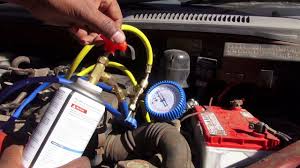
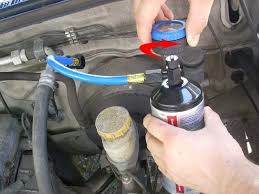
The next step is to locate the low-pressure port in your car’s AC system. This is where you’ll connect the refrigerant canister or refill hose. Usually, the low-pressure port is located near the compressor or the accumulator/drier.
3. Attach the Refrigerant Can
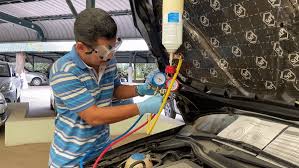
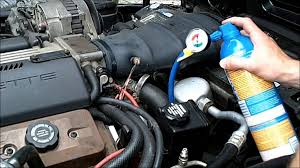
If you’re using a refrigerant recharge kit, attach the canister or refrigerant bottle to the low-pressure port. Follow the manufacturer’s instructions carefully and wear protective gloves and safety glasses to avoid any accidents.
4. Check the Pressure
Use a pressure gauge to check the system’s refrigerant pressure. This will give you an indication of whether the system is low on refrigerant or if it’s functioning properly.
5. Recharge the AC System
If the refrigerant level is low, slowly release refrigerant into the system, watching the pressure gauge to ensure the system does not become overcharged. Continue to add refrigerant until the system reaches the correct pressure. Be careful not to overcharge, as this can cause damage to the system.
6. Test the AC System
After recharging, turn on your car’s AC system and check if the air is cooler. If the cooling performance improves, the recharge was successful.
7. Seek Professional Help
If your car’s AC is still not cooling properly after recharging, or if you suspect a refrigerant leak, it is recommended to have the system inspected by a qualified technician. At Air Green Corporation, we recommend regular AC inspections and maintenance to ensure optimal cooling performance, improve component life, and prevent costly repairs.