
When you pop the hood of your vehicle, you’re looking at one of the most complex, intricate systems designed to turn fuel into power and make your car run smoothly. From the engine to the various auto parts that keep everything operating efficiently, understanding the importance of each component is essential for car owners, mechanics, and enthusiasts alike.
In this extensive guide, we’ll dive deep into the world of auto parts and engines, exploring the various components that make up your vehicle’s engine, how they function, and how you can maintain or repair them. Whether you’re a DIY mechanic looking to expand your knowledge, or a car owner wanting to understand what makes your vehicle run, this article covers everything you need to know.
The Engine: The Heart of the Vehicle
At the center of any vehicle is the engine. It’s the powerhouse responsible for converting fuel into the mechanical energy that powers the car’s wheels. Understanding how an engine works and the key engine components that keep it running smoothly is essential for both basic vehicle maintenance and more advanced repairs.
1. How Does a Car Engine Work?
The internal combustion engine (ICE), which powers most modern vehicles, operates by burning fuel (usually petrol or diesel) inside its cylinders. This controlled explosion releases energy, which then turns the engine’s crankshaft, providing power to move the car. Here’s a breakdown of how it works:
- Intake Stroke: The intake valve opens, and the piston moves down the cylinder, drawing in a mixture of air and fuel.
- Compression Stroke: The intake valve closes, and the piston moves upward, compressing the air-fuel mixture for ignition.
- Power Stroke: The spark plug ignites the compressed mixture, causing an explosion that forces the piston down.
- Exhaust Stroke: The exhaust valve opens, and the piston moves up again, pushing the spent gases out of the cylinder.
This four-stroke cycle (also known as the Otto cycle) repeats continuously, producing the energy needed to propel your car forward.
2. Types of Car Engines
There are several types of car engines, and the type in your vehicle plays a critical role in its performance, efficiency, and driving experience. Here are the most common types:
- Inline Engines (I-Engines): In these engines, the cylinders are arranged in a straight line. They’re simple, compact, and cost-effective. Inline engines are usually found in small to mid-sized vehicles.
- V-Engines: In V-engines, the cylinders are arranged in two rows in the shape of a “V”. This configuration allows for more cylinders in a smaller space, offering greater power. V6 and V8 engines are common examples.
- Boxer Engines: Boxer engines have horizontally opposed cylinders, meaning they lie flat and move in opposite directions. This configuration offers better balance and lower vibration. Subaru and Porsche are well known for using boxer engines.
- Rotary Engines: Less common but unique, rotary engines use a rotor instead of pistons to create combustion. They’re smaller, lighter, and rev higher than conventional engines but tend to be less fuel-efficient and durable.
Understanding your car’s engine type helps you better appreciate its performance capabilities and maintenance needs.
Key Auto Parts That Make Up a Car Engine
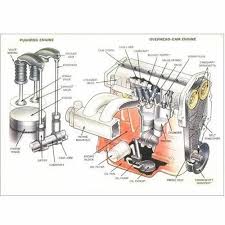
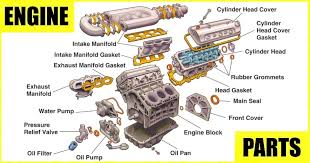
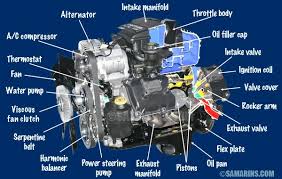
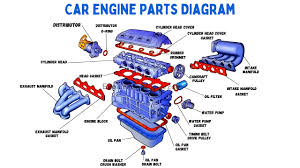
To keep an engine running smoothly, there are a variety of essential components working in unison. These components each have specific functions, and if one fails, it can affect the engine’s overall performance. Below are the essential auto parts that make up a car engine.
1. Cylinder Block
The cylinder block (or engine block) is the main structure of the engine, housing the cylinders, pistons, and other essential components. It’s typically made from cast iron or aluminum alloy for durability and weight reduction. The block includes the core passages for lubrication and cooling, and the crankshaft is mounted inside it.
2. Pistons
Pistons are the components that move up and down within the cylinders. As the fuel mixture ignites, the resulting explosion pushes the pistons down, transferring energy to the crankshaft. This linear motion is then converted into rotational energy to power the wheels.
3. Crankshaft
The crankshaft is a long metal rod that converts the up-and-down movement of the pistons into rotational motion. It’s a critical component in transferring power from the engine to the rest of the vehicle. It works in conjunction with the flywheel and is one of the most important parts of the engine.
4. Camshaft
The camshaft controls the opening and closing of the engine’s valves. It’s synchronized with the crankshaft and controls the timing of the intake and exhaust valves. The camshaft is essential for ensuring proper timing for the intake of fuel and air, as well as the expulsion of exhaust gases.
5. Valves
The engine has two types of valves: intake valves and exhaust valves. The intake valves allow the air-fuel mixture into the cylinders, while the exhaust valves let the spent gases exit after combustion. The timing and operation of these valves are controlled by the camshaft.
6. Spark Plugs
Spark plugs are responsible for igniting the air-fuel mixture in the cylinders. The ignition creates a spark that ignites the fuel, causing combustion. Modern spark plugs are designed to last tens of thousands of miles, but they can degrade over time, leading to misfires and poor engine performance.
7. Timing Belt/Chain
The timing belt or timing chain ensures that the camshaft and crankshaft stay synchronized, allowing the engine’s valves and pistons to work in harmony. If the timing belt or chain breaks, the engine will lose synchronization, leading to potential catastrophic engine damage.
8. Oil Pump
The oil pump circulates engine oil throughout the system, lubricating moving parts and reducing friction. Oil also helps cool the engine. Without a functioning oil pump, the engine would overheat, wear out prematurely, and could eventually seize up entirely.
9. Water Pump
The water pump is an essential component of the cooling system, circulating coolant through the engine to prevent it from overheating. It ensures that the engine operates at an optimal temperature by maintaining a steady flow of coolant.
10. Alternator
The alternator is responsible for charging the vehicle’s battery while the engine is running. It provides electrical power to various components like the lights, air conditioning, and audio system. If the alternator fails, your battery will drain, and electrical components will stop working.
11. Fuel Injectors
Fuel injectors spray a fine mist of fuel into the engine’s cylinders, where it mixes with air for combustion. Modern engines use electronic fuel injection (EFI) systems, which are more efficient and precise than older carbureted systems. This results in better fuel economy and performance.
The Exhaust System: Vital for Engine Efficiency and Environmental Protection
The exhaust system plays a critical role in controlling harmful emissions, ensuring that exhaust gases are safely routed out of the vehicle. The key components of an exhaust system include:
1. Exhaust Manifold
The exhaust manifold collects exhaust gases from the engine’s cylinders and directs them into the rest of the exhaust system. It’s typically made from cast iron or stainless steel for durability.
2. Catalytic Converter
The catalytic converter is designed to reduce harmful emissions by converting toxic gases like carbon monoxide, nitrogen oxides, and hydrocarbons into less harmful substances. It’s an essential component for meeting environmental regulations.
3. Muffler
The muffler reduces the noise generated by the engine’s exhaust gases as they leave the vehicle. It works by dissipating sound waves and lowering the noise emitted from the exhaust system.
4. Exhaust Pipe
The exhaust pipe carries the exhaust gases from the engine to the rear of the vehicle. It ensures that the gases exit safely and do not accumulate inside the cabin.
Auto Parts for Engine Maintenance and Repairs
Maintaining your vehicle’s engine involves regular inspections and replacement of key parts. If a component wears out or breaks, it can affect the engine’s performance and longevity. Here are some tips for maintaining your engine’s parts:
1. Regular Oil Changes
Engine oil lubricates the moving parts, reducing friction and wear. Regular oil changes are crucial to ensure that the engine continues to run smoothly and does not overheat.
2. Timing Belt and Chain Inspections
Since the timing belt and chain are responsible for synchronizing the engine’s internal components, it’s important to inspect and replace them at the recommended intervals. Failing to replace a worn or damaged timing belt or chain can lead to severe engine damage.
3. Spark Plug Replacement
Spark plugs can wear out over time, causing misfires and poor fuel performance. Regular spark plug replacement is a fairly simple task that can help maintain engine performance.
4. Fuel Injector Cleaning
Fuel injectors can become clogged with carbon deposits over time, leading to poor fuel performance and reduced engine performance. Periodic cleaning or replacement of fuel injectors can help maintain optimal engine function.
5. Coolant Flush
Over time, coolant can break down and become less effective at regulating the engine’s temperature. Performing a coolant flush at the recommended intervals will help prevent overheating and engine damage.
Conclusion: Understanding Your Car’s Engine and Auto Parts
Understanding how auto parts and engines work together to make your vehicle run smoothly is essential for proper maintenance, repairs, and the longevity of your car. The engine, as the heart of the vehicle, depends on dozens of interconnected components — from pistons and the crankshaft to the timing belt, spark plugs, and exhaust system — all working together with precision.
By staying on top of routine maintenance, replacing worn engine parts before they fail, and using quality components whenever repairs are needed, you can keep your engine running reliably for years, avoid costly breakdowns, and get the most out of every mile you drive.