
By Airgreen Corporation — Manufacturers & Suppliers of Auto Parts and Automotive AC Components
At Airgreen Corporation, we work as manufacturers and suppliers of auto parts, with a strong focus on bus and commercial vehicle air conditioning systems. Bus AC systems face a tougher job than passenger car systems — running for longer hours, cooling larger cabins, and carrying more passenger load. In this guide, we break down every major bus AC component, common failure points, and maintenance best practices for fleet operators and workshops.
Why Bus AC Systems Are Different
A bus air conditioning system has to cool a much larger cabin volume than a car, often for 8–16 hours a day, with frequent door openings letting in hot air. This means bus AC components are built with:
- Higher-capacity compressors
- Larger condensers and evaporators
- Reinforced components rated for continuous-duty cycles
- Roof-mounted or under-floor AC units (depending on bus type)
Because of this heavier workload, bus AC parts wear faster than passenger car components and require more frequent inspection and maintenance.
Core Components of a Bus AC System
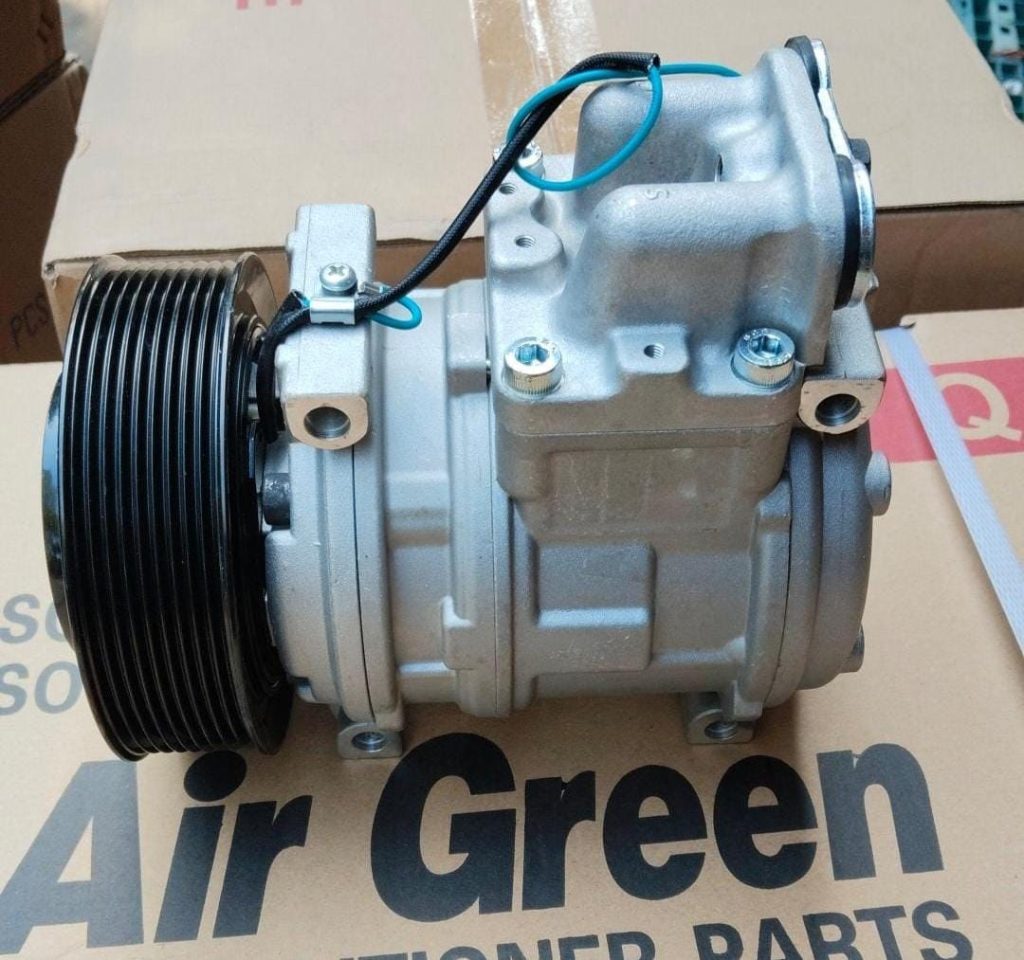
1. Bus AC Compressor
The compressor is the heart of the system, compressing refrigerant gas and circulating it through the AC loop. Buses typically use heavy-duty compressors (such as Sanden SD7/TR series or Bock/Bitzer units for larger fleets) rated for continuous operation.
Common signs of compressor failure:
- Warm or inconsistent airflow
- Loud grinding or clicking noise
- Compressor clutch not engaging
- Visible oil leaks around the compressor housing
2. Bus AC Condenser
The condenser releases the heat absorbed by the refrigerant, converting it from a hot gas back into a liquid. Bus condensers are typically larger and roof-mounted, exposed to more dust and debris than car condensers.
Common issues:
- Clogged fins from road dust and debris, reducing cooling efficiency
- Physical damage from road debris (especially in roof-mounted units)
- Refrigerant leaks at connection points
3. Bus AC Evaporator
The evaporator absorbs heat from the cabin air, cooling it before it’s circulated back through the vents. In buses, evaporators are often larger and positioned to distribute cooled air evenly across a long cabin.
Common issues:
- Reduced airflow from a clogged or dirty evaporator core
- Musty odors from mold/bacteria buildup on the evaporator coil
- Water leakage into the cabin from a blocked drain line
4. Expansion Valve / Orifice Tube
Regulates refrigerant flow into the evaporator. A faulty expansion valve can cause uneven cooling or complete AC failure.
5. Receiver Drier / Accumulator
Filters moisture and contaminants from the refrigerant. A saturated or clogged drier can lead to reduced cooling and compressor damage over time.
6. AC Blower Motor & Fans
Circulate cooled air through the cabin (evaporator side) and dissipate heat at the condenser. Bus systems often use multiple blower motors to cover the length of the cabin.
Common Bus AC Problems & Causes
| Problem | Likely Cause |
|---|---|
| Warm air despite AC running | Faulty compressor, low refrigerant, failed clutch |
| Weak airflow from vents | Clogged evaporator, faulty blower motor |
| AC cools only at the front/back of the bus | Ductwork blockage, uneven blower distribution |
| Water dripping inside cabin | Blocked evaporator drain line |
| Musty smell from vents | Mold/bacteria buildup on evaporator coil |
| Frequent refrigerant loss | Leak at condenser, hose fittings, or compressor seals |
Bus AC Maintenance Tips for Fleet Operators
- Clean condenser fins regularly — roof-mounted condensers collect dust fast; monthly cleaning prevents efficiency loss.
- Check refrigerant levels each season — low refrigerant is one of the most common causes of compressor failure due to inadequate lubrication.
- Inspect belts and clutch engagement — worn belts reduce compressor performance and can lead to sudden failure.
- Flush and clean evaporator drain lines — prevents water leakage into the cabin and mold buildup.
- Schedule preventive AC servicing before peak summer season — reduces breakdowns during high-demand periods.
- Use OEM-grade or verified aftermarket parts — mismatched components are a leading cause of premature AC failure in fleet vehicles.
OEM vs Aftermarket Bus AC Parts
OEM bus AC parts offer guaranteed fitment and are built to the original system specification, but come at a higher cost — often justified for critical components like compressors.
Aftermarket/compatible bus AC parts are more budget-friendly and widely available, making them practical for high-turnover fleet maintenance, provided they’re sourced from a verified auto parts manufacturer or supplier.
As manufacturers and suppliers of auto parts, Airgreen Corporation supplies bus AC compressors, condensers, evaporators, and related components, helping fleet operators and workshops source fitment-accurate parts without compromising on reliability.
Frequently Asked Questions
What are the main parts of a bus AC system? The core components are the compressor, condenser, evaporator, expansion valve, receiver drier, and blower motors — working together to compress, cool, and circulate refrigerant and cabin air.
Why does bus AC fail more often than car AC? Bus AC systems run longer hours, cool larger cabin volumes, and are exposed to more dust and road debris (especially roof-mounted condensers), leading to faster wear compared to passenger car systems.
How often should bus AC systems be serviced? Most fleet operators service bus AC systems at least twice a year — before summer and after — with condenser cleaning and refrigerant checks recommended monthly during peak usage.
What causes water leakage inside a bus cabin from the AC? This is usually caused by a blocked evaporator drain line, which prevents condensation from draining properly and causes it to leak into the cabin instead.
Can I use aftermarket AC compressors for buses? Yes, as long as the aftermarket compressor matches the required displacement, port configuration, and clutch/pulley type, and is sourced from a verified auto parts manufacturer or supplier.
Why Choose Airgreen Corporation
Airgreen Corporation is a trusted name among manufacturers of auto parts, specializing in automotive air conditioning systems and components for cars, buses, trucks, and heavy machinery. Our bus AC product range includes:
- Bus AC compressors (Sanden, Mahle Behr, and compatible heavy-duty units)
- Bus AC condensers and evaporators
- Expansion valves, receiver driers, and blower motors
- Complete AC spare parts support for fleet and commercial vehicles
Whether you’re a fleet operator, parts distributor, or workshop owner, Airgreen Corporation provides fitment-accurate, quality-tested bus AC parts backed by manufacturing expertise.
Looking for reliable bus AC parts — compressors, condensers, or evaporators? Airgreen Corporation — manufacturers and suppliers of auto parts — supplies a complete range of OEM and OEM-grade bus AC components. Contact us today for fleet sourcing and bulk order inquiries.